
Most Pakistani investors chase the stock market, gold, or real estate in the city. Few ever look toward the fields that feed the nation. Yet agricultural investments might just be the smartest move sitting right under our noses. This guide breaks down everything you need to know about investing in agriculture, from farmland to tech-driven startups, so you can decide if this overlooked sector deserves a spot in your portfolio.
What Is Agricultural Investment?

Agricultural investment simply means putting your money into anything connected to farming, food production, or the supply chain that gets crops from soil to plate. This can include buying productive farmland, investing in agri-based companies listed on the stock exchange, or backing a startup building smarter irrigation systems. It’s a broad category that goes well beyond the image of a farmer with a plow.
In Pakistan, agriculture isn’t a niche industry. It contributes close to a quarter of the country’s GDP and employs nearly 40% of the workforce. Despite this massive footprint, most local investors treat it as an afterthought. That gap between economic importance and investor attention is exactly where opportunity tends to hide.
Why Now Is the Right Time to Invest in Agriculture
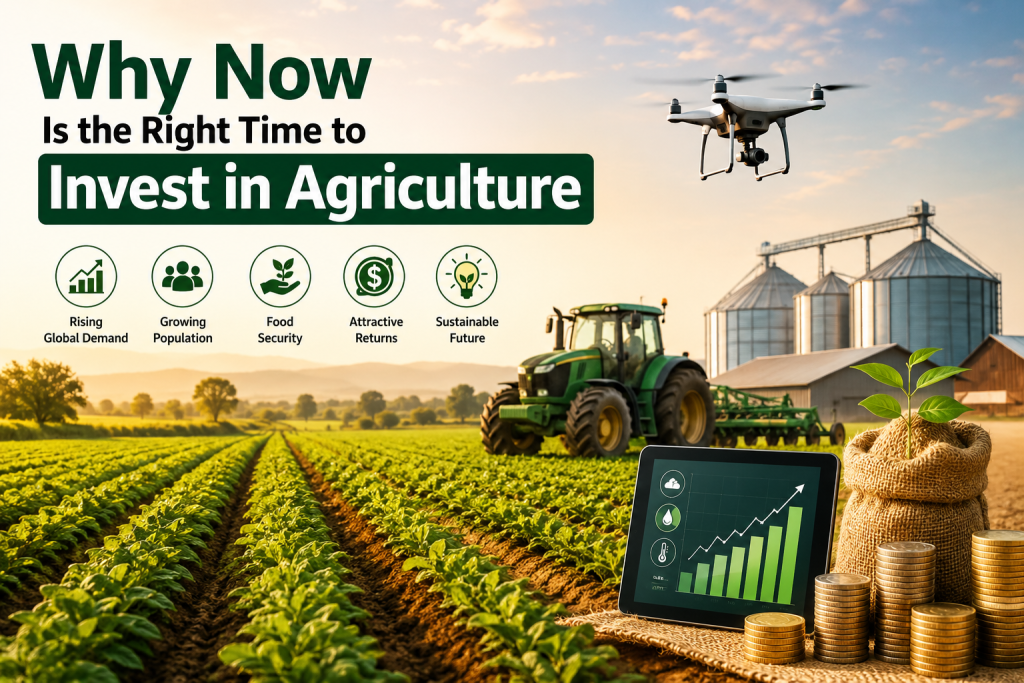
Global food demand is climbing fast, and it isn’t slowing down anytime soon. The world’s population is expected to hit 9.6 billion by 2050, which means food production will need to jump by roughly 70% to keep up. That kind of pressure doesn’t just affect farmers. It creates a long runway of demand for anyone with a stake in the agricultural sector.
Closer to home, Pakistan’s economic climate adds another layer of urgency. Rupee devaluation and persistent inflation have eaten into the value of cash savings for years. Agriculture, tied directly to real assets like land and crops, tends to hold its value better during these stretches. When food demand and production challenges collide with currency instability, investing in agriculture starts to look less like a gamble and more like a hedge.
Key Benefits of Investing in Agriculture
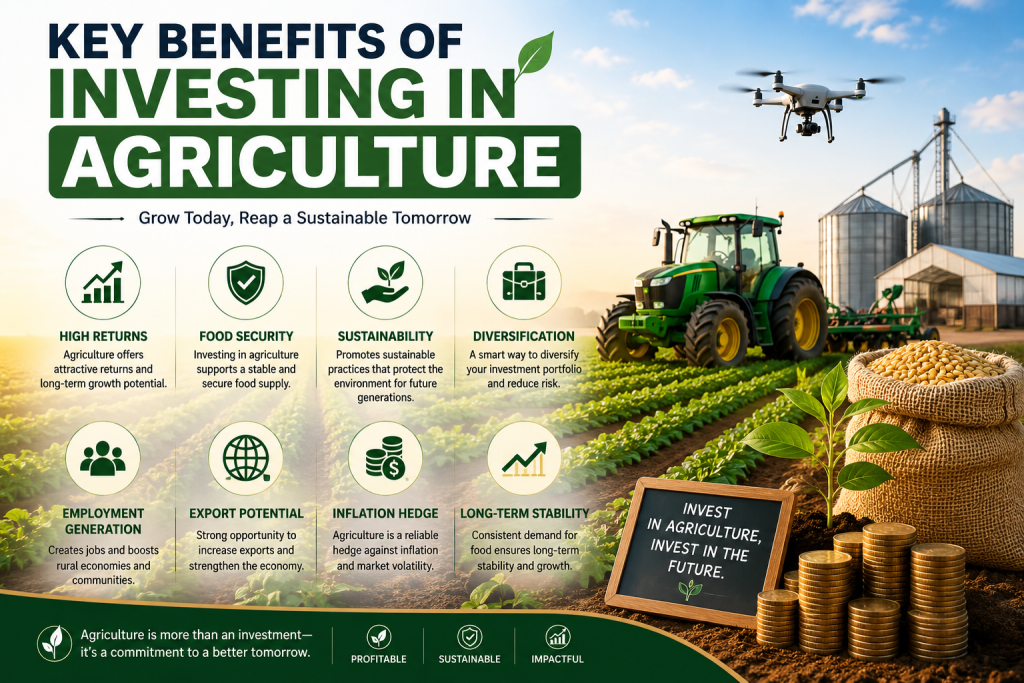
Agriculture offers a mix of financial and practical advantages that few other sectors can match. It provides genuine portfolio diversification, since farmland and agri-stocks don’t always move in the same direction as the general stock market. This means when your other investments dip, agriculture can act as a cushion rather than falling along with them.
There’s also the matter of long-term financial stability. Farming has supported economies since the earliest civilizations, and that resilience hasn’t disappeared. Add in the fact that agricultural assets serve as a natural inflation hedge, since food prices tend to rise alongside general inflation, and you’ve got a sector built for staying power rather than short-term hype.
| Benefit | Why It Matters |
|---|---|
| Diversification | Reduces reliance on stock market performance |
| Inflation Hedge | Value often rises alongside food prices |
| Tangible Asset | Physical land holds real, lasting value |
| Passive Income | Leasing and crop-share arrangements generate cash flow |
| Consistent Demand | Food is always needed, regardless of economic cycles |
Different Ways to Invest in Agriculture
There isn’t just one path into this sector. Depending on your budget, risk appetite, and how hands-on you want to be, you’ll find several routes worth exploring.
Farmland Investment (Direct Ownership)
Buying land directly is the most traditional route into farmland investing. You either lease the land to a farmer for steady rental income or hire someone to manage crop production on your behalf. This route demands a fair amount of upfront capital, but it comes with the reward of owning a genuinely tangible asset that tends to appreciate over time.
Farm Real Estate Investment Trusts (REITs)
Farm REITs let you invest in income-generating farmland without buying or managing any land yourself. You simply purchase shares in a trust that owns multiple agricultural properties, and you earn a portion of the rental income or profits. It’s a far more accessible entry point for investors who like the idea of farm real estate but don’t want the operational headache.
Agricultural Stocks
Agricultural stocks cover companies involved in fertilizers, seeds, farm equipment, and food processing. In Pakistan, names like Fauji Fertilizer and Engro Corporation are commonly traded on the PSX and give investors indirect exposure to the sector. Buying these shares works exactly like any other stock purchase, tied to company performance rather than land ownership.
Agricultural Exchange-Traded Funds (ETFs)
Agricultural ETFs bundle together a mix of agri-stocks, commodity contracts, and related businesses into a single tradable fund. This gives you instant diversification across the sector without needing to research and pick individual companies one by one. It’s a low-effort way to gain broad exposure while spreading out risk.
Agricultural Commodities
Agricultural commodities refer to raw goods like wheat, cotton, and sugarcane, all of which happen to be major crops grown across Pakistan. Investors typically access this market through futures contracts, agreeing to buy or sell a set quantity at a future price. This path can be volatile, so it usually suits investors who already have some market experience.
AgTech Investments
AgTech investments put your money behind companies building the technology that modernizes farming, from automated irrigation to crop-monitoring drones. This corner of the sector is more speculative than farmland or stocks, but it carries strong upside potential as food producers race to become more efficient.
Crowdfunding and Fractional Farmland Platforms
A newer option gaining traction for investing in agriculture is fractional farmland investing through crowdfunding platforms. These platforms let multiple investors pool money together, making investing in agriculture far more accessible than buying an entire plot outright. This approach lowers the entry barrier significantly for anyone new to the sector. For someone who likes the idea of farmland investing as a way of investing in agriculture but doesn’t have hundreds of thousands of rupees ready to deploy, this route can be a practical starting point for investing in agriculture without the usual capital hurdle.
Why Farmland Specifically Stands Out as an Asset
Among all the options for investing in agriculture, farmland tends to earn special attention, and for good reason. It’s one of the few assets that combines real estate value with productive earning potential. Unlike a residential plot sitting idle, farmland actively generates income year after year through crops or lease payments, making it one of the most rewarding paths for investing in agriculture over the long run.
Farmland values have also shown remarkable consistency over the decades. Historical data from agricultural markets abroad shows farmland appreciating at steady annual rates even through recessions and inflationary periods. In Pakistan, fertile belts across Punjab and Sindh continue to see strong demand, driven by both local investors and overseas Pakistanis looking for a stable place to park their money.
Passive Income Potential From Agricultural Investments
One of the most underrated perks of agriculture is the ability to earn passive income without lifting a finger day-to-day. Leasing farmland to an experienced farmer means you collect a cash rental rate every season while someone else handles the actual labor and risk. It’s about as hands-off as real estate investing gets.
Beyond leasing, some investors opt for crop-share arrangements, where you receive a percentage of the harvest’s value instead of a fixed rent. Farm REITs offer a similar peace of mind, paying out dividends from a portfolio of properties without requiring you to manage a single acre yourself.
What to Consider Before Investing in Agriculture
Before jumping in, take time to figure out which type of investment actually fits your goals. Someone drawn to hands-on ownership might prefer direct farmland, while a more passive investor may lean toward REITs or ETFs. Your choice should reflect your available capital, risk tolerance, and how involved you want to be.
It’s equally important to run a proper risk vs. reward assessment before committing funds. Look into the sustainability of the business model, whether that’s a farm’s water usage practices or a company’s growth plans, since sustainable investing tends to hold up better long-term. Don’t forget to map out your exit strategy too. Knowing how and when you’ll eventually sell gives you far more control over your financial future.
Risks Involved in Agricultural Investing
No investment is without risk, and investing in agriculture comes with its own set of challenges worth understanding upfront. Weather is the big one. Droughts, floods, and unpredictable rainfall patterns can directly hurt crop yields and, in turn, your returns. Pakistan’s water scarcity issues make investing in agriculture an especially relevant concern for anyone considering farmland ownership in certain regions.
Market volatility is another factor, particularly for commodities and agricultural stocks, which can swing based on global supply and demand shifts. Liquidity is worth noting too. Unlike stocks you can sell within seconds, farmland can take months to find the right buyer. Going in with realistic expectations about these risks will save you from unpleasant surprises later.
How to Get Started With Agricultural Investing
Getting started doesn’t require a massive leap. Begin by researching the sector thoroughly, reading market reports, and understanding current trends in food demand and production both locally and globally. Consulting with an agricultural investment specialist can also help you avoid rookie mistakes.
From there, many investors ease in through smaller commitments like agricultural ETFs or REITs before working their way up to direct farmland ownership. This step-by-step approach lets you build confidence and knowledge in farm management basics while keeping your initial risk manageable. Over time, as your understanding deepens, you can scale into larger, more direct positions within the sector.
Frequently Asked Questions (FAQs)
Is agriculture a good investment in Pakistan?
Yes, given agriculture’s massive contribution to the national economy and its natural resistance to inflation, it remains a solid option for portfolio diversification, especially during periods of currency instability.
How much money do I need to invest in farmland?
Direct farmland purchases can require significant capital, often starting in the range of several hundred thousand rupees depending on location and land quality. Fractional platforms and REITs offer much lower entry points for beginners.
What are the risks of agricultural investment?
The main risks include weather-related crop damage, water scarcity, market price volatility, and lower liquidity compared to stocks. Doing proper research beforehand helps manage these risks effectively.
Can beginners invest in agriculture?
Absolutely. Beginners often start with agricultural ETFs or farm REITs since these require less capital and expertise than owning farmland directly, making them a gentler entry into the alternative asset class.