

Real estate has always been close to the Pakistani heart, and for good reason. Property offers a sense of security that few other investments can match. Whether you’re eyeing a small plot on the outskirts of the city or a rental apartment in a busy sector, real estate investment remains one of the most trusted paths toward long-term wealth building.
Beginners often feel overwhelmed by the choices, from residential properties to commercial properties, but understanding the basics changes everything. This guide walks you through proven strategies, smart financing options, and legal must-knows, so your very first investment decision becomes a confident one rather than a guess.
What Is Real Estate Investment and Why It Matters
Real estate investment simply means putting your money into property with the goal of earning profit. That profit can come through rental income, resale value, or both. In Pakistan, this has become one of the most trusted paths to building wealth because property rarely loses value the way other assets sometimes do.
The reason this matters so much right now is timing. Pakistan’s urban population keeps growing, new housing societies keep launching, and demand for both commercial and residential space keeps climbing. A beginner who understands the basics today positions themselves ahead of the curve tomorrow. Real estate rewards patience, not guesswork.
Real Estate vs Other Investment Options in Pakistan

Compare property to gold or the stock market and the difference becomes clear. Gold prices swing with global sentiment. Stocks can crash overnight. Property, however, tends to hold its ground even during economic uncertainty, and it offers something stocks and gold don’t: usable, tangible value you can build on or rent out.
Types of Real Estate Investments You Can Choose From

Not all property is the same, and knowing your options changes everything. Residential properties include everything from single-family homes to condominiums and townhouses in societies like DHA or Bahria Town. These remain the most common entry point for new investors because demand for housing never really slows down.
Beyond homes, commercial properties such as shops, plazas, and office spaces offer higher rental yields but usually require bigger capital. Multifamily properties, including apartment complexes and duplexes and triplexes, let you collect multiple rent checks from one building. Then there’s land investments, particularly undeveloped or raw land on the outskirts of growing cities, which many Pakistani investors buy purely for future appreciation.
| Property Type | Typical Investment Size | Best For |
|---|---|---|
| Residential Plot | Low to Medium | Long-term appreciation |
| Apartment/Flat | Medium | Rental income |
| Commercial Shop | Medium to High | High rental yield |
| Raw Land | Low to Medium | Future development |
Popular Real Estate Investment Strategies for Beginners
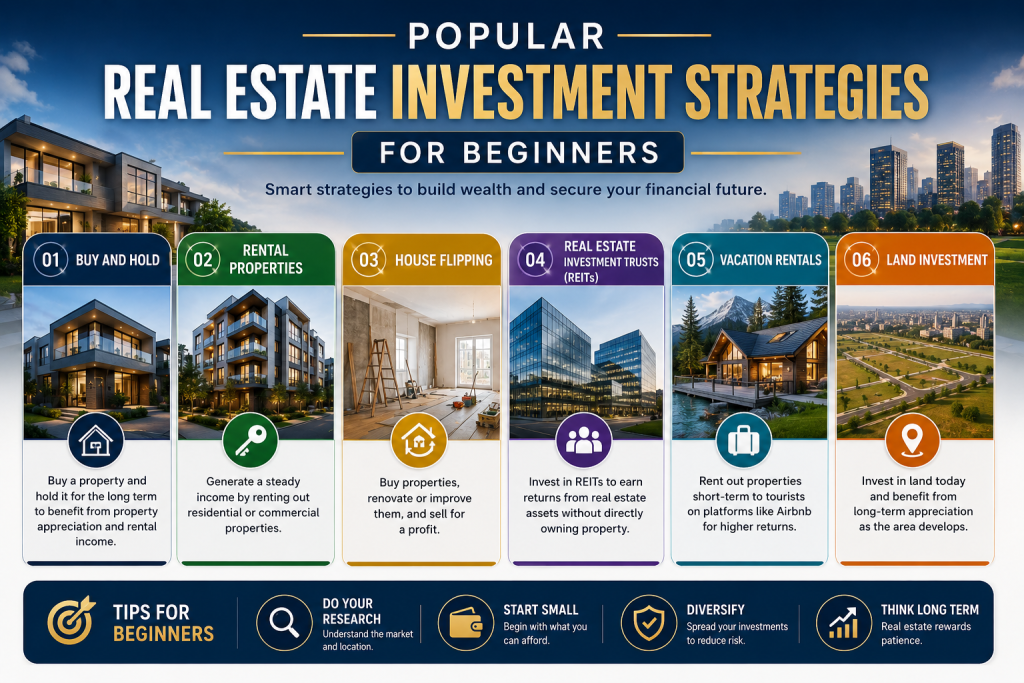
Once you understand property types, the next step is picking a strategy that fits your budget and patience level. The buy and hold strategy remains the favorite among Pakistani investors. You purchase a plot or house, wait a few years, and sell once prices climb. It’s slow but it works, and it comes with the added bonus of steady rental income if you choose to lease the property while you wait.
For those wanting faster returns, plot file trading is common in local markets, though it carries more risk. Concepts like house hacking, where you live in part of a property while renting out the rest, are also gaining ground in Pakistani cities. On a bigger scale, real estate syndication and real estate investment trusts (REITs) allow investors to pool money together, while real estate crowdfunding platforms let smaller passive investors join larger projects without managing anything themselves.
Buy and Hold vs Quick Flipping
Buy and hold suits investors chasing long-term wealth building, while flipping suits those comfortable with short-term risk. Beginners are usually better off starting with the buy and hold approach since it demands less market timing skill and rewards patience over speculation.
How to Research and Analyze the Real Estate Market

Good research separates profitable investors from disappointed ones. Start by studying location growth potential. Areas near new infrastructure projects, ring roads, or CPEC-linked routes often see faster property appreciation than established sectors that have already peaked in value.
Comparing rates across different phases and sectors within the same society also matters. A plot in a newly launched phase might cost half of one in an older, developed phase, yet still offer strong upside once development catches up. Talk to local agents, check recent transaction prices, and never rely on a single source of information before committing your money.
Financing Options for New Real Estate Investors
Most beginners don’t have full cash upfront, and that’s completely normal. Bank home loans remain a solid option for salaried individuals, though interest rates in Pakistan can make monthly payments heavy. For those who prefer Sharia-compliant options, Islamic financing through several local banks avoids conventional interest structures while still helping you secure a property.
Developers also make things easier through installment plans, often spread across two to four years with manageable down payments. This route has opened real estate investment to a much wider group of people, including young professionals who couldn’t otherwise afford a lump sum purchase. Always read the payment schedule carefully before signing anything.
Legal and Tax Considerations Before You Invest
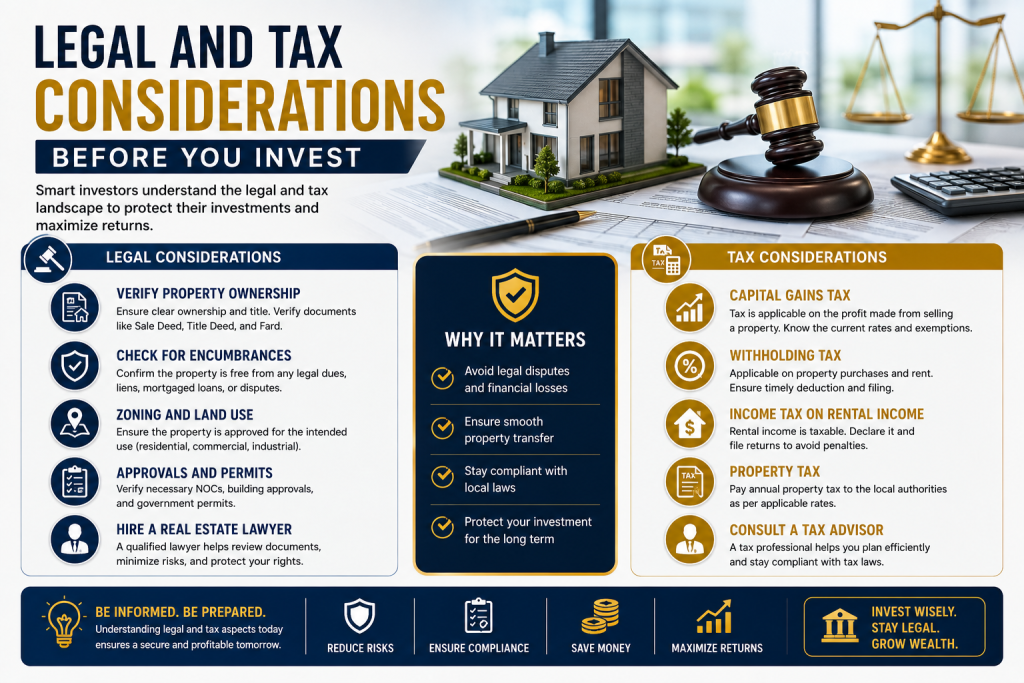
Skipping legal checks is where many beginners lose money. Before buying anything, verify the property’s documents, confirm NOC status with the relevant development authority, and check that the seller actually holds clear title. Fraudulent files and disputed land are unfortunately common enough that this step cannot be rushed.
On the tax side, Pakistan’s FBR has specific rules around capital gains on property sales, and rates depend on how long you’ve held the asset before selling. Holding periods, filer versus non-filer status, and applicable withholding tax all affect your final profit. A quick consultation with a tax advisor before purchase can save significant money later.
Common Mistakes Beginners Make in Real Estate Investment
Even smart people make avoidable errors when they’re new to property investment. Buying without verifying legal status tops the list, followed closely by ignoring proper market research and simply trusting an agent’s word on pricing. Overpaying because of emotional attachment to a location is another trap that catches first-time buyers off guard.
Another common mistake is putting all your savings into one property instead of thinking about portfolio diversification across different types or locations. Beginners also tend to underestimate holding costs like maintenance, security charges, and taxes, which quietly eat into expected profits over time.
Building the Right Team: Agents, Lawyers, and Consultants

No successful investor works alone, and property is no exception. A trustworthy real estate agent who knows the specific society or area you’re targeting can save you months of wasted searching. Look for someone with a solid track record rather than the loudest advertising.
A property lawyer is equally important, especially during document verification and transfer of ownership. They catch red flags an untrained eye would miss entirely. Combine that with an experienced consultant for market pricing guidance, and you’ve built a small team capable of protecting your investment from the common pitfalls beginners face.
How to Start Small and Scale Your Investment Over Time
You don’t need millions to begin. Many successful investors started with one small plot or a single rental unit and built from there. Starting small lets you learn the practical side of ownership, dealing with tenants, paying taxes, and understanding local market rhythms, without risking everything at once.
Once that first investment matures and generates profit, reinvest it into a bigger property or a second unit. This gradual approach naturally builds long-term wealth building momentum while keeping risk manageable at every stage. Patience here beats speed almost every time.
Frequently Asked Questions (FAQs)
1. What is real estate investment?
Real estate investment means putting your money into property to earn profit through rental income or resale value. It’s one of the most trusted wealth-building options in Pakistan.
2. How much money do I need to start real estate investment in Pakistan?
You can start small with a single plot or apartment through installment plans offered by developers. Many investors begin with modest savings and scale up gradually over time.
3. Which type of property is best for beginners?
Residential plots and small apartments are usually the safest starting point for new investors. They require lower capital and carry less risk compared to commercial properties.
4. Is real estate investment safe in Pakistan?
Yes, property investment is generally considered safer than stocks or gold due to its stable long-term value. However, legal verification of documents is essential before buying.
5. What is the best real estate investment strategy for beginners?
The buy and hold strategy works best for beginners since it requires less market timing and lower risk. It also offers rental income while you wait for appreciation.