
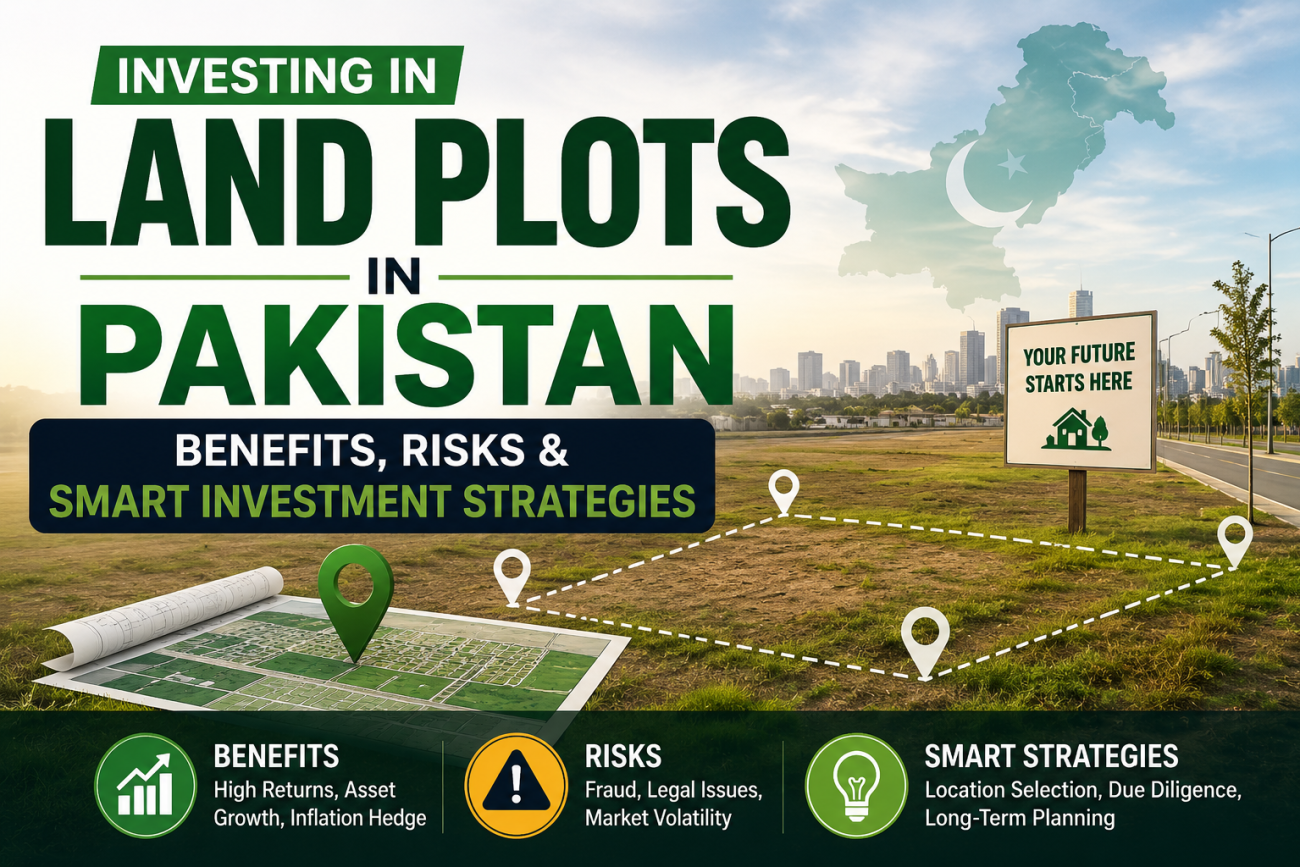
Pakistan’s property market continues to attract investors looking for secure and profitable opportunities. Land investment has become one of the most trusted ways to build long-term wealth because land usually grows in value over time. Many people now prefer vacant land investment due to rising inflation, expanding cities, and increasing housing demand. Unlike other assets, plots require less maintenance and offer flexible future usage.
Investors also see land as a strong protection against economic uncertainty and market fluctuations. Whether someone wants to create a stable investment portfolio, secure future income, or benefit from land appreciation, buying plots in high-growth areas can provide excellent opportunities for financial growth and stability.
| Major Reasons People Invest in Land Plots in Pakistan |
| Rising property demand |
| Inflation protection |
| Lower maintenance costs |
| Flexible future usage |
| Strong resale opportunities |
| Better long-term growth |
What is Land Plot Investment and How Does It Work?
Land investment means buying a piece of land with the goal of earning profit in the future. Investors purchase residential, commercial, or agricultural plots and wait for the area to develop over time. As roads, schools, shopping centers, and transport systems improve, the property value usually increases. This process is called land appreciation or capital appreciation. Many investors also use plots for residential development, farming, or future business projects.
In Pakistan, investors commonly purchase plots in housing societies through installment plans. Some buyers choose raw land in developing locations because prices remain lower during the early stages. Others focus on undeveloped land near highways, ring roads, and industrial zones. This method is often known as land banking because investors hold land for years while waiting for future development opportunities. Smart land investors study market trends carefully before making a land purchase decision.
Top Benefits of Investing in Land Plots

One of the biggest advantages of investing in land plots is the potential for long-term appreciation. Land usually becomes more valuable as cities expand and infrastructure improves. Unlike buildings that lose condition over time, plots do not suffer heavy wear and tear. This makes land a low maintenance investment with minimal upkeep requirements. Investors do not need to worry about expensive repairs, tenant complaints, or heavy property maintenance costs.
Another important benefit is flexibility. A plot acts like a blank canvas because owners can use it for multiple purposes. Some investors build houses while others start shops, warehouses, or farms. This type of flexible land use creates many opportunities for future profit. Investors also use plots as a stock market hedge and inflation hedge because land values often rise during inflationary periods. Many experts consider real estate investment one of the strongest methods for financial stability and portfolio diversification.
| Benefits of Land Plot Investment |
| Strong future growth |
| Low maintenance |
| Flexible land use |
| Inflation protection |
| High resale potential |
| Better portfolio balance |
Risks and Disadvantages of Land Investment
Although vacant land investment offers attractive rewards, investors must also understand the risks. Fraud remains a major issue in Pakistan’s property sector. Some housing societies sell illegal files without approvals or ownership rights. Buyers who ignore document verification often lose money. Delayed development projects also create problems because investors may wait years before receiving possession. Poor location choices can reduce future land value and weaken resale opportunities.
Another challenge involves liquidity. Selling land quickly can sometimes become difficult during slow market conditions. Investors who need urgent cash may struggle to find buyers. In some areas, sudden government regulations or tax changes can impact prices. Investors should also remember that plots generate no monthly rent unless used for farming or commercial purposes. This means land ownership works better for patient investors who understand the importance of a long-term investment strategy.
Residential Plot vs Flat Which is a Better Investment?

Many Pakistani investors compare plots and apartments before making a decision. Flats can provide rental income immediately, which helps people seeking regular monthly cash flow. However, apartments also involve service charges, maintenance fees, and repair expenses. In contrast, plots usually experience stronger land value appreciation over time because the supply of land remains limited. This makes plots more attractive for investors focused on future growth.
A residential plot also gives owners freedom to design and build a custom home according to their needs. Flats do not offer the same level of flexibility. In cities like Lahore and Islamabad, many investors now prefer plots in high-growth areas because of expanding infrastructure and increasing demand. However, apartments remain suitable for investors who prioritize rental income and city-center living. The right choice depends on personal goals and the overall investment strategy.
| Plot vs Flat Comparison |
|—|—|
| Plots offer stronger appreciation | Flats offer rental income |
| Lower maintenance costs | Higher upkeep expenses |
| Flexible construction options | Limited customization |
| Better for long-term growth | Better for monthly cash flow |
Important Factors to Check Before Buying a Plot
Before making a land acquisition, investors must verify all legal documents carefully. The society should possess proper approvals and NOCs from relevant authorities. Buyers should confirm ownership records and check whether the plot has disputes or unpaid taxes. Many scams happen because people trust agents blindly without conducting research. Visiting the site personally also helps investors understand road access, nearby facilities, and development progress.
Location remains one of the most important factors in property investment. Areas near motorways, business districts, and public transport systems usually perform better over time. Investors should also study future government projects because new roads and commercial centers often increase future land value rapidly. Access to water, electricity, schools, and hospitals also improves demand. A strong strategic location often separates successful investments from poor ones.
Best Strategies to Earn High Returns from Land Investment
Successful investors follow smart methods instead of emotional decisions. One common strategy involves buying plots in emerging societies before prices rise. Investors who enter early often benefit from major capital appreciation once development begins. This method works especially well near ring roads, industrial zones, and smart city projects. Many experts call this approach a land banking strategy because investors hold property patiently while waiting for growth.
Another effective method involves diversification. Experienced buyers spread investments across multiple projects instead of relying on one location. This improves portfolio diversification and reduces risk. Investors should also monitor market cycles carefully because buying during slow periods often creates better opportunities. Some investors combine vacant property holdings with commercial investments to strengthen their real estate portfolio. Smart timing and research remain essential for long-term success.
Is Investing in Vacant Land Worth It in 2026?

Experts believe investing in land plots will remain attractive in 2026 because Pakistan’s urban population continues to expand rapidly. Increasing population growth and rising housing shortages create stronger demand for residential projects. Cities continue spreading outward, which increases interest in suburban and developing areas. Investors searching for stable real estate assets may continue choosing plots because land often survives economic pressure better than many other investments.
The rise of gated communities and smart housing projects has also improved confidence in vacant land investment opportunities. Areas connected to highways, metro systems, and industrial corridors may experience faster growth. Investors focusing on future development zones could benefit from strong appreciation during the next decade. However, success still depends on careful planning, legal verification, and proper market research before purchasing land.
Common Mistakes to Avoid When Buying Land Plots
Many investors lose money because they chase hype instead of studying facts. Some buyers purchase plots based only on advertisements without checking legal status or development progress. Others ignore market comparisons and pay inflated prices. Investing emotionally can damage long-term returns. Buyers should avoid rushing into deals without understanding location demand, resale trends, and future infrastructure plans.
Another common mistake involves ignoring professional advice. Investors should consult lawyers, surveyors, and experienced agents before finalizing a land purchase. Visiting the site personally also helps avoid fake claims. Buyers who skip due diligence often face ownership disputes or delayed possession issues. Smart investors focus on facts, patience, and realistic expectations instead of promises of overnight profit.
Who Should Invest in Land Plots?
Land investment works well for people seeking long-term financial security. Overseas Pakistanis often prefer plots because they are easier to manage remotely. Young professionals also invest in land to secure future homes and protect savings against inflation. Business owners sometimes purchase plots for future offices, warehouses, or commercial projects. Investors interested in passive investment opportunities may also benefit because land usually requires less daily management.
However, plots may not suit everyone. Investors who need quick monthly income may prefer rental apartments or businesses instead. Land usually performs better for patient individuals willing to wait several years for appreciation. Buyers uncomfortable with market research or legal verification should seek professional guidance before entering the property sector. Proper planning remains essential for building strong land assets and a stable investment portfolio.
Conclusion: Is Investing in Land Plots the Right Choice for You?
Investing in land plots remains one of the most popular forms of real estate investment in Pakistan because it offers strong growth potential, lower maintenance costs, and flexible future opportunities. Investors who focus on legal verification, market research, and strategic locations often achieve excellent long-term returns. Land continues attracting buyers because it protects wealth during inflation and supports future financial security.
However, every investment carries risk. Investors should avoid emotional decisions and focus on realistic planning. Proper research, patience, and smart timing can transform simple plots into powerful real estate assets for future generations. Whether you are building a home, expanding your investment portfolio, or seeking stronger financial stability, land can become a valuable part of your long-term success strategy.
FAQs
1. Is land investment profitable in Pakistan?
Yes, land investment can be highly profitable because property prices usually increase over time in developing and high-demand areas.
2. What is the biggest benefit of buying vacant land?
The main advantage of vacant land investment is low maintenance cost and strong future appreciation potential.
3. Is buying a plot better than buying a flat?
Plots often offer better long-term growth while flats provide monthly rental income and easier living facilities.
4. What should I check before buying a land plot?
You should verify ownership documents, NOC approvals, location, and future development plans before making a purchase.
5. How long should I hold land for better returns?
Most experts recommend holding land for at least 5 to 10 years to benefit from strong land appreciation and market growth.