
Picking the right place to grow your money in Pakistan can feel overwhelming, especially when banks, brokers, and relatives all push different advice. The good news is you don’t need to gamble your savings to earn a solid return. This guide breaks down sixteen genuinely safe investments with high returns, ranging from government-backed savings certificates to dividend-paying stocks on the PSX. Each option balances capital preservation with real growth potential, so your money keeps pace with inflation instead of quietly losing value. Whether you’re saving for something in the next year or building long-term wealth through compound interest, you’ll find a mix of liquidity, risk level, and average returns that fits your specific financial goals.
What Are Safe Investments and Why They Matter
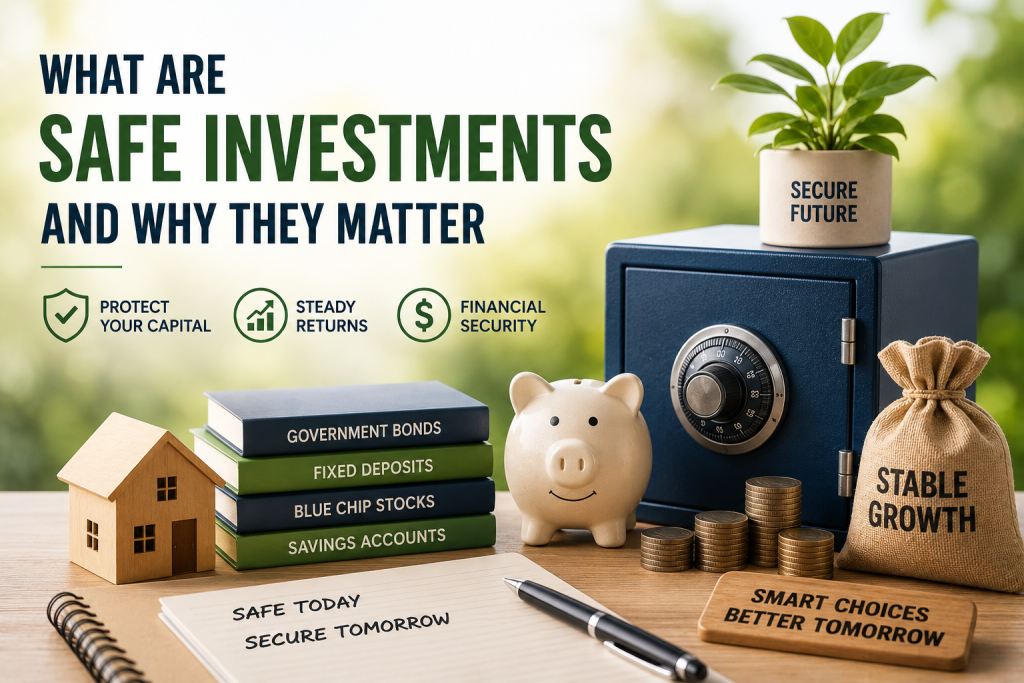
A safe investment is simply one where you’re unlikely to lose your original money. It won’t always make you rich overnight, but it won’t wipe out your savings either. Think of it as the financial equivalent of wearing a seatbelt: it doesn’t stop the journey, it just protects you if things go sideways. Most safe options come with a predictable fixed rate of interest, government backing, or both.
For Pakistani savers, this matters more than most people realize. The inflation rate here has swung wildly over the past few years, quietly eating away at cash sitting idle in a normal account. Choosing genuinely investments with high returns means your money grows faster than prices rise, protecting your purchasing power instead of slowly losing it to inflation year after year. Without the right investments with high returns, even disciplined savers end up losing ground to inflation without realizing it. That’s why picking investments with high returns early on makes such a big difference over time.
16 Best Safe Investments With High Returns in 2026
There’s no single “best” option here. The right pick depends on your goals, your timeline, and how much liquidity you need. Below is a rundown of the strongest choices available in Pakistan today, roughly ordered from the most conservative to the slightly more adventurous.
| Investment Type | Risk Level | Typical Returns | Liquidity |
|---|---|---|---|
| National Savings Certificates | Very Low | 12–15% | Medium |
| Bank Savings Accounts | Very Low | 8–12% | High |
| Term Deposit Certificates | Low | 13–16% | Medium |
| Pakistan Investment Bonds | Low | 13–15% | High |
| Treasury Bills | Low | 12–14% | High |
| Sukuk Bonds | Low | 11–14% | Medium |
| Behbood Certificates | Very Low | 15–16% | Medium |
| Money Market Funds | Low | 12–15% | High |
| Dividend-Paying PSX Stocks | Medium | 8–15% (dividend yield) | High |
| REITs (Pakistan) | Medium | 8–12% | Medium |
| Rental Property | Low-Medium | 4–8% + appreciation | Low |
| Gold Investment | Low-Medium | Varies with market | High |
| Term Finance Certificates | Medium | 12–16% | Medium |
| Roshan Digital Account | Low | 11–15% (USD-based) | Medium |
| Index Funds/ETFs (PSX) | Medium | 10–20% | High |
| P2P/Fintech Lending | Medium | 15–20% | Low |
1. National Savings Certificates
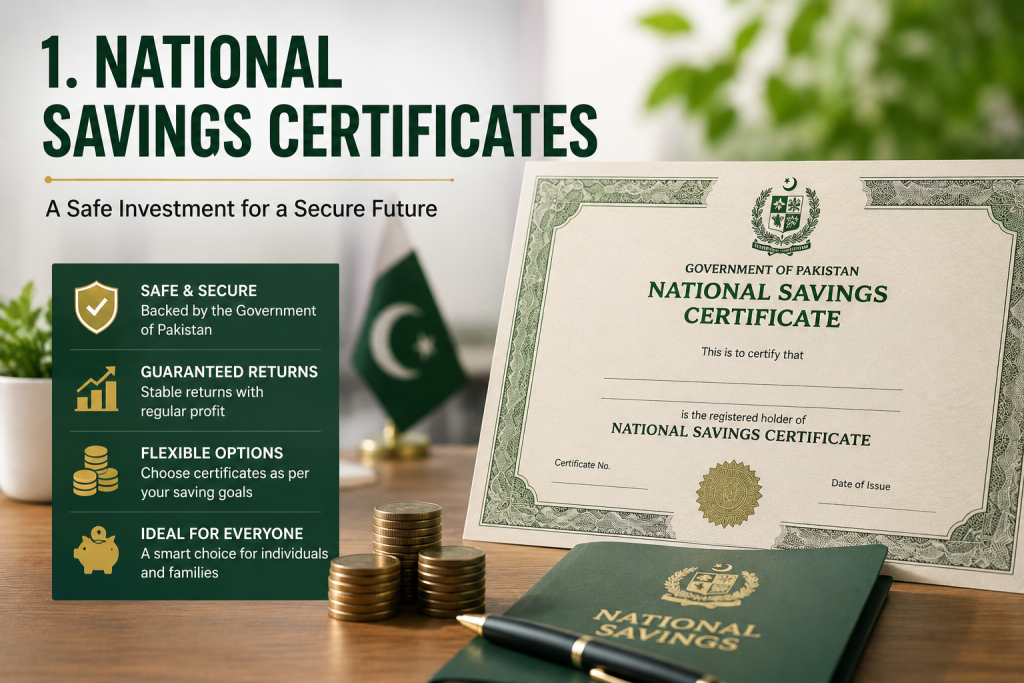
Government-backed schemes like Defence Savings and Regular Income Certificates remain a household favourite. Your principal investment stays protected, and you earn a predictable return until maturity date. They’re not flashy, but they’re about as close to a guarantee as Pakistan’s market offers.
2. Bank High-Yield Savings Accounts
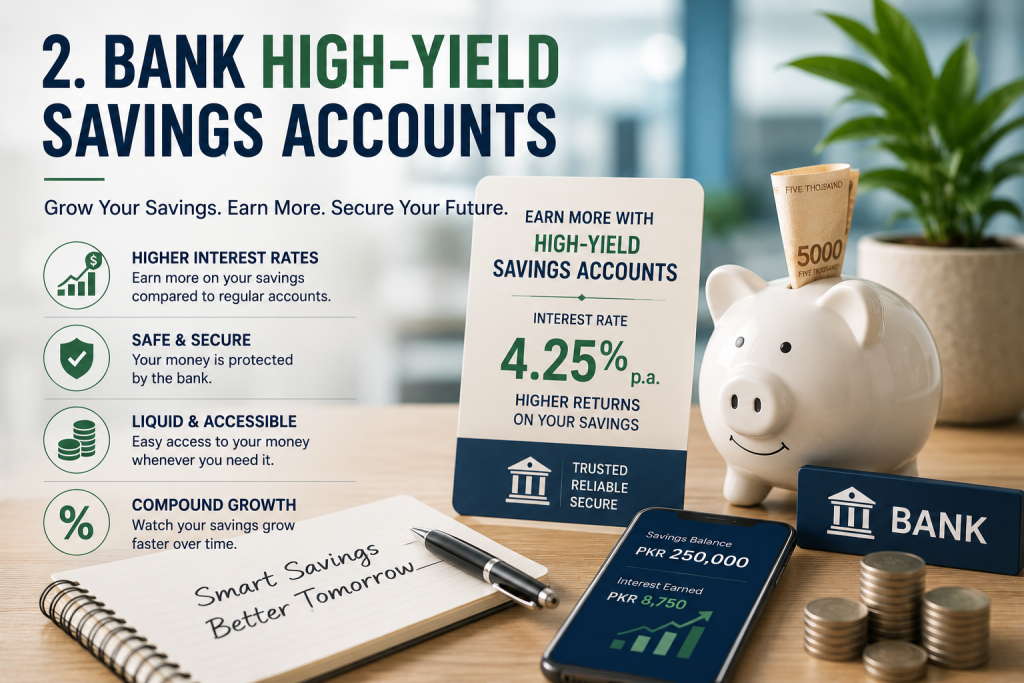
Several banks now offer savings accounts with investments with high returns in mind, offering rates well above the old standard. Your money stays liquid, protected under State Bank of Pakistan regulated deposit protection, and you can withdraw whenever needed. The trade-off with these investments with high returns is a lower average return compared to riskier options.
3. Term Deposit Certificates (TDRs)
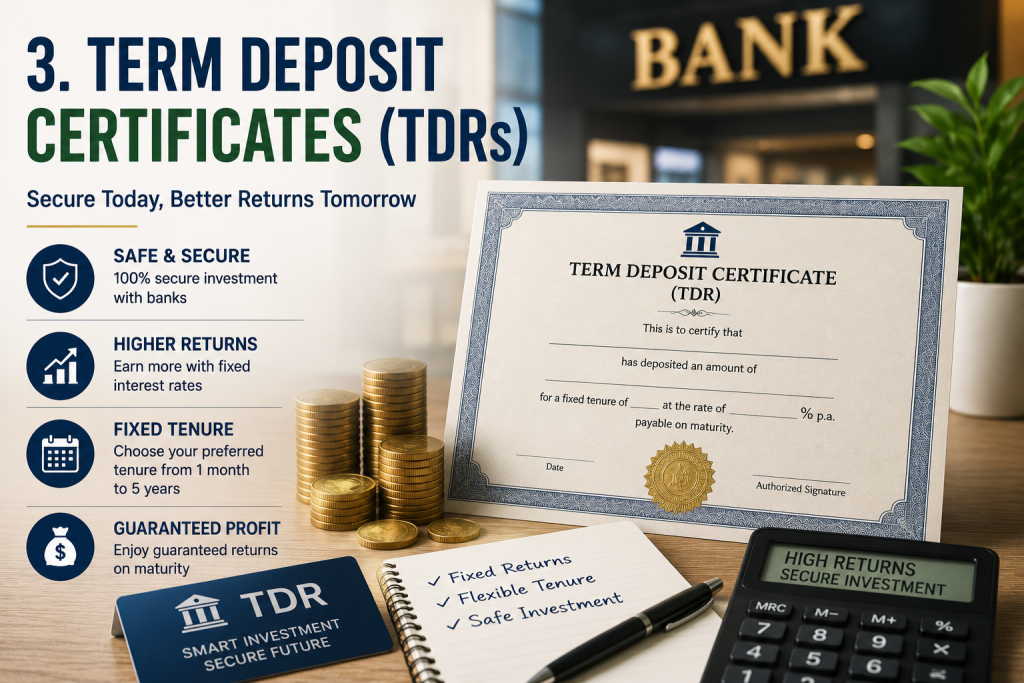
A TDR locks your money for a set period in exchange for a better interest rate than a regular account. Breaking it early usually triggers early withdrawal penalties, so only lock in funds you genuinely won’t need before the term ends.
4. Pakistan Investment Bonds (PIBs)
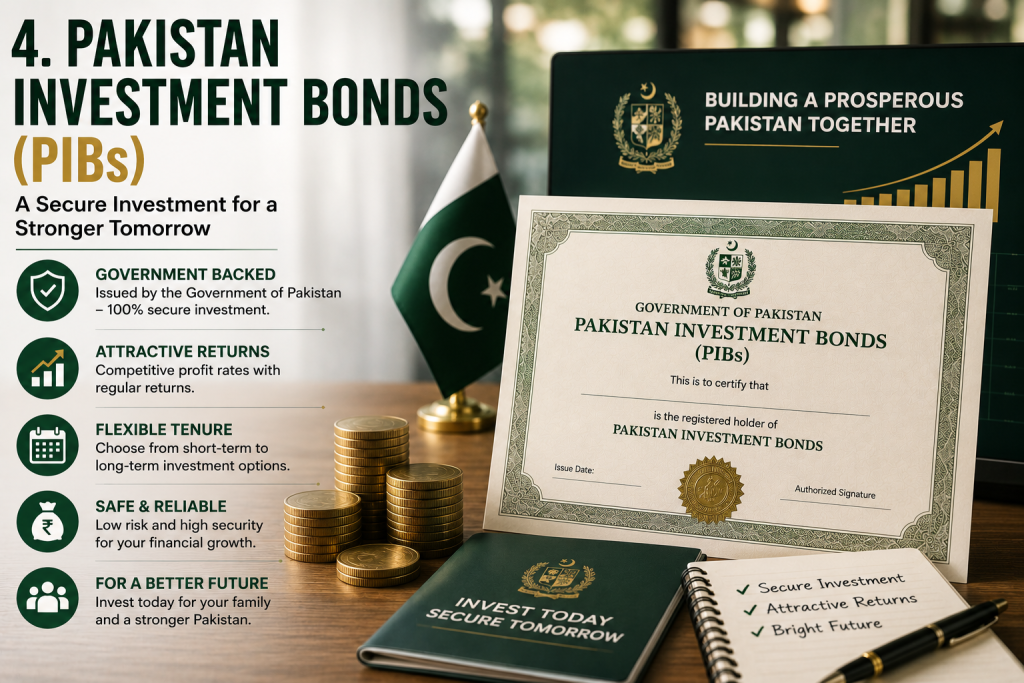
These government bonds pay a fixed rate of interest over terms ranging from three to twenty years. They trade on a secondary bond market, meaning you can sell before maturity if you need cash, though the price may shift with prevailing rates.
5. Treasury Bills (T-Bills)
T-bills are short-term government debt, maturing in three, six, or twelve months, and they remain one of the more reliable investments with high returns for cautious savers. They’re sold at a discount and redeemed at face value, making the average returns on these investments with high returns simple to calculate. Many investors use them for capital preservation while still earning more than a savings account, which is exactly why these investments with high returns stay popular year after year..
6. Islamic Sukuk Bonds
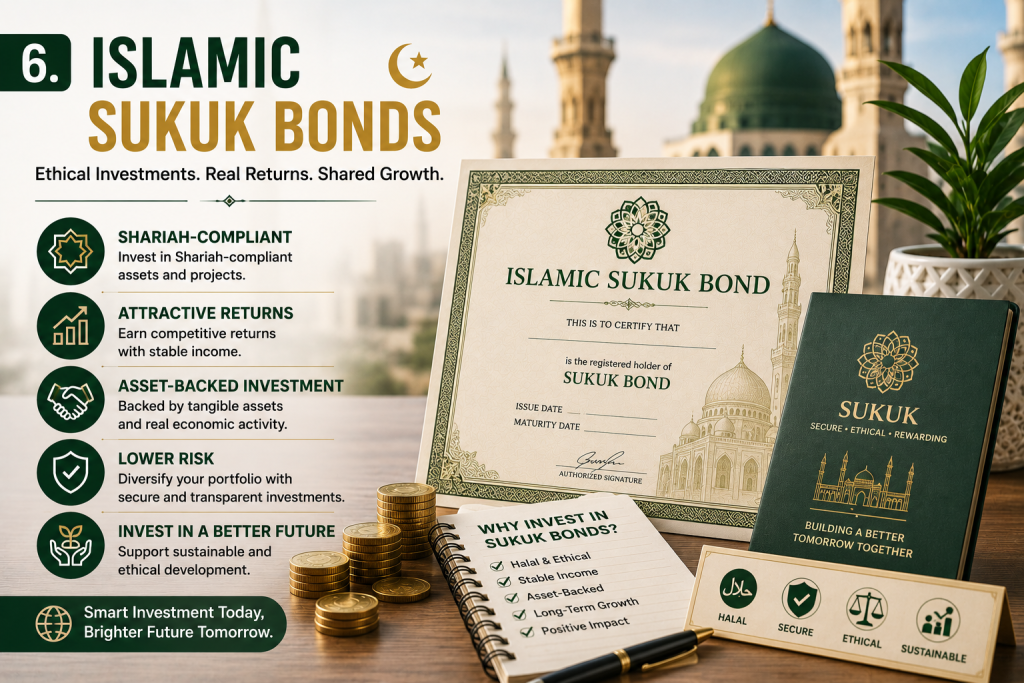
For investors who prefer Shariah-compliant options, sukuk bonds offer asset-backed returns instead of interest in the traditional sense. They carry government or corporate backing and remain one of the more reliable safe investments with high returns for religiously conscious savers.
7. Behbood Savings Certificates
Designed specifically for senior citizens and widows, these certificates typically pay the highest rate among government savings schemes. Eligibility is limited, but for those who qualify, the returns comfortably beat inflation with minimal risk to the principal investment.
8. Money Market Mutual Funds
These funds pool investor money into short-term government and bank instruments, managed by professionals at firms like UBL Fund Managers or Meezan Bank’s asset management arm. They offer better liquidity than fixed deposits along with competitive average returns.
9. Dividend-Paying Blue-Chip Stocks (PSX)
Established companies on the Pakistan Stock Exchange (PSX), such as those in oil, cement, and banking sectors, regularly distribute profits to shareholders. A strong dividend yield provides income even when share prices stay flat, though values can still fluctuate with the KSE-100 Index.
10. Real Estate Investment Trusts (REITs)
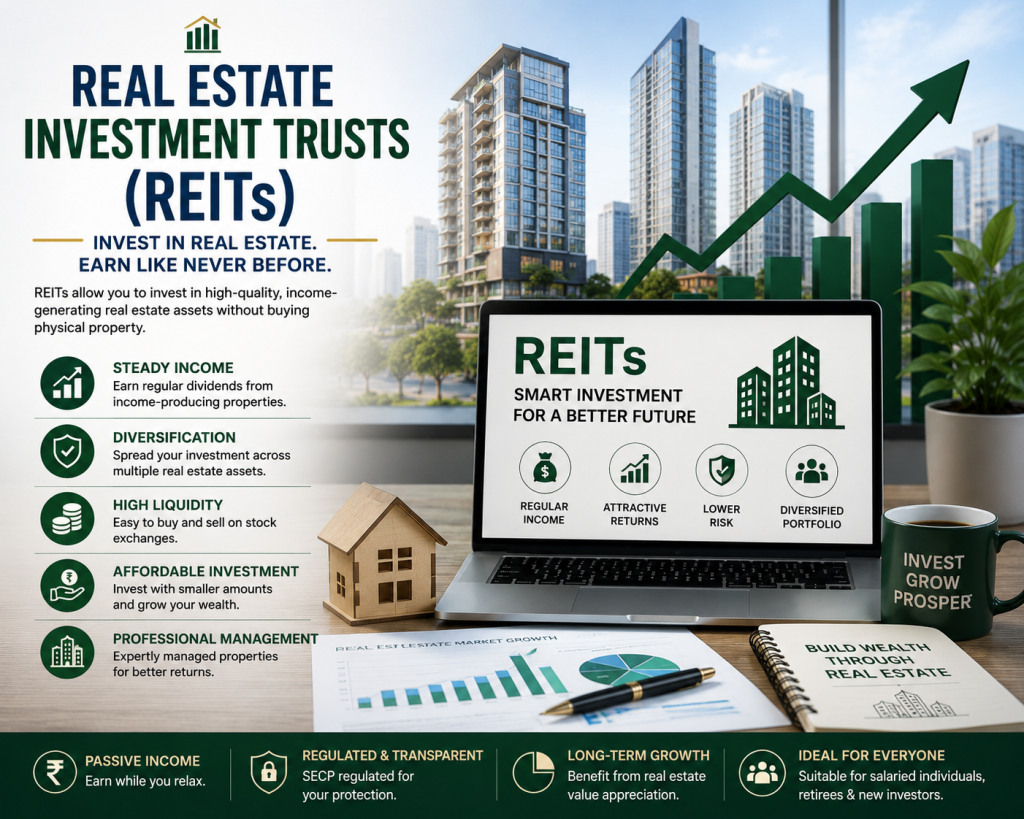
REITs let you invest in commercial or residential property without buying an entire building yourself. Regulated by the Securities and Exchange Commission of Pakistan (SECP), they offer decent liquidity and exposure to real estate’s traditionally stable long-term growth.
11. Rental Property

Direct real estate remains a cultural favourite for wealth-building in Pakistan. Rental income provides steady cash flow, and property values often appreciate over time. The catch is low liquidity since selling a property takes considerably longer than selling a bond.
12. Gold and Digital Gold Investment

Gold has long served as a hedge against currency devaluation and inflation. Digital gold platforms now let you buy fractional amounts without storing physical bars, combining liquidity with the metal’s traditional role in portfolio diversification.
13. Corporate/Term Finance Certificates (TFCs)
Companies issue TFCs to raise funds, paying investors a fixed rate of interest in return. Ratings from agencies like PACRA or VIS help you judge safety before investing, since not every issuer carries the same credit strength.
14. Roshan Digital Account Investments
Built for overseas Pakistanis, this State Bank of Pakistan initiative allows dollar-denominated investment in government securities and equities. It combines the safety of government backing with returns pegged to foreign currency, shielding investors from rupee depreciation.
15. Index Funds and ETFs on PSX
Rather than picking individual stocks, index funds track the broader market, spreading risk across dozens of companies. Over the long run, this approach has historically delivered strong average returns with lower expense ratio costs than actively managed funds.
16. Peer-to-Peer and Fintech Lending Platforms
Newer fintech platforms connect individual lenders with borrowers, cutting out the traditional bank. Returns can be attractive, but liquidity is limited and regulation is still catching up, so treat this as a small slice of a diversified plan rather than a core holding.
How to Choose the Right Safe Investment for Your Financial Goals
Start by asking yourself three questions: when do you need this money back, how much volatility can you stomach, and do you need regular income or long-term growth? Someone saving for a wedding next year has very different needs than someone building a retirement fund over twenty years.
Once you know your timeline, match it against risk level and liquidity. Short horizons call for T-bills or savings accounts. Longer horizons can absorb a bit more risk, opening the door to dividend stocks or PIBs, where compound interest has time to work its magic.
Safe Investments vs High-Risk Investments — Key Differences
Safe investments prioritize capital preservation and predictable income, often government-backed with a fixed rate of interest. High-risk investments, like individual growth stocks or crypto, chase bigger capital gains but come with real potential for loss. Neither approach is wrong; they simply serve different purposes in a portfolio.
The smartest investors don’t pick one camp exclusively. They blend both, using safe instruments to protect their base while allocating a smaller portion toward growth assets. This balance is the essence of portfolio diversification, and it’s what separates a resilient financial plan from a gamble.
Best Safe Investments for Short-Term Savings Goals
If you’re saving for something within the next one to two years, like an emergency fund or a planned expense, prioritize liquidity over maximum yield. Treasury bills, bank savings accounts, and short-term TDRs fit this bill nicely, letting you access cash without much hassle.
Avoid locking money into anything with steep early withdrawal penalties if you expect to need it soon. The goal here isn’t to chase the highest average returns possible; it’s to keep your money safe and accessible when life inevitably throws a surprise expense your way.
Best Safe Investments for Long-Term Wealth Building
For goals five years or further out, retirement, a child’s education, or buying a home, you can afford to take on slightly more risk in exchange for better growth. Pakistan Investment Bonds, dividend-paying PSX stocks, and index funds all shine here.
Over long periods, compound interest and reinvested dividend yield payments do the heavy lifting. A modest but consistent return, left untouched for a decade or more, often outperforms chasing quick wins through riskier, short-term bets.
Tax Implications of Safe Investments You Should Know
Profits from most safe investments in Pakistan attract withholding tax, and the rate often depends on whether you’re a tax filer or non-filer. Filers typically enjoy noticeably lower rates on profit from savings certificates, bonds, and bank deposits, which makes staying on the Active Taxpayer List genuinely worthwhile.
Zakat is another consideration many guides skip. Certain savings instruments deduct zakat automatically unless you submit an exemption declaration, so check the fine print before investing if this matters to your religious obligations. A quick chat with a tax advisor can save you from surprises at profit payout time.
Common Mistakes People Make When Picking “Safe” Investments
The biggest mistake is chasing the highest advertised interest rate without checking who’s offering it. Unregulated schemes promising unusually high returns are a classic warning sign, and Pakistan has seen its share of investment scams targeting exactly this instinct.
Another common slip is ignoring inflation entirely. An investment that pays 10% sounds great until you realize the inflation rate was 15% that year, quietly shrinking your purchasing power. Skipping portfolio diversification and putting everything into one instrument is the third frequent mistake worth avoiding.
Frequently Asked Questions (FAQs)
1. Which is the safest investment option in Pakistan?
National Savings Certificates and Treasury Bills are the safest, since both carry direct government backing with minimal risk to your principal.
2. Can safe investments really offer high returns?
Yes, options like Behbood Certificates and Pakistan Investment Bonds often beat standard bank savings rates while keeping your money protected.
3. Is real estate a safe investment in Pakistan?
Real estate is reasonably safe and appreciates over time, but it lacks liquidity compared to bonds or savings certificates, so plan accordingly.
4. How does inflation affect my safe investments?
If your return falls below the inflation rate, your money loses purchasing power even though the account balance keeps growing steadily.
5. Do I need a financial advisor to choose safe investments?
Not necessarily, but an advisor can help match instruments to your goals, especially around tax efficiency and portfolio diversification.