
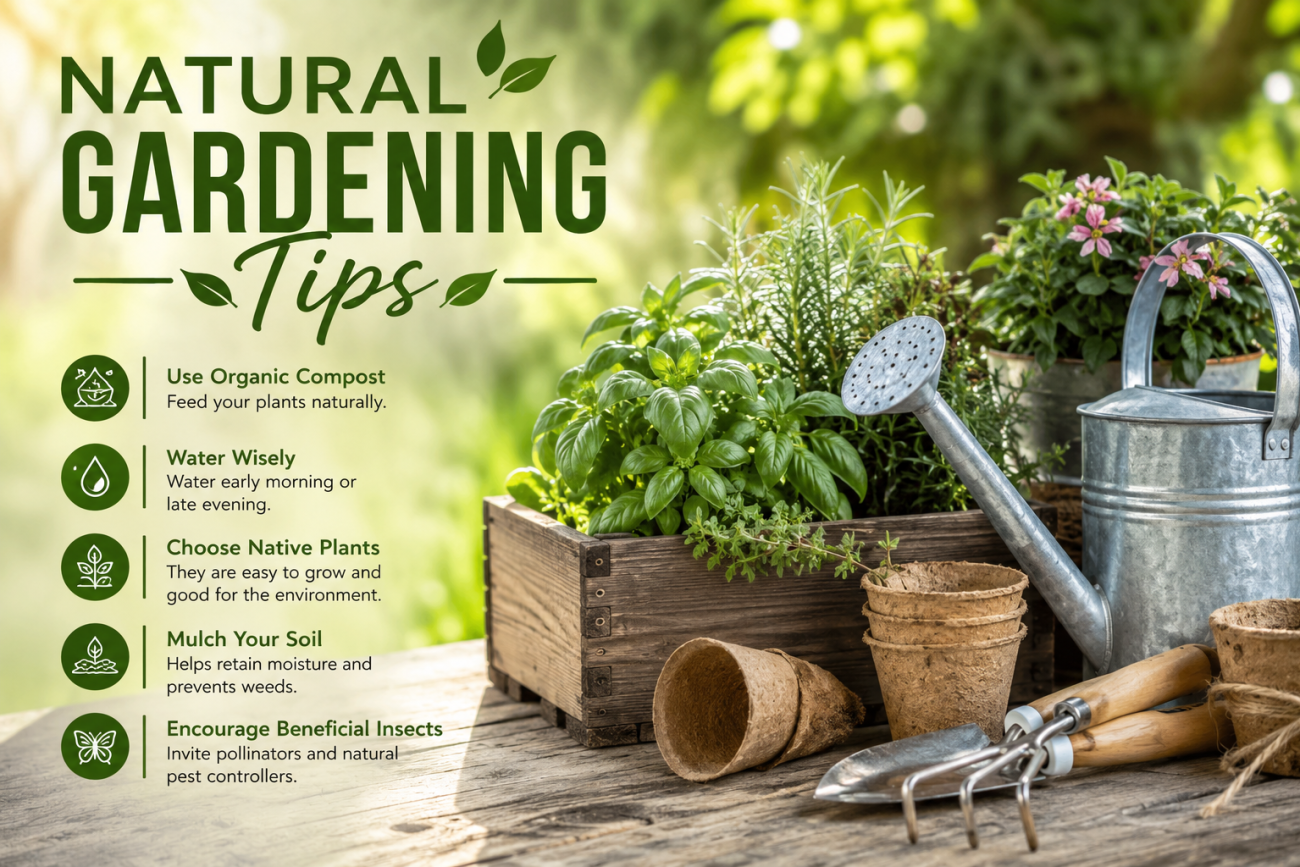
Growing your own food doesn’t need to involve harsh chemicals or expensive sprays anymore. More Pakistani families are discovering Natural Gardening Tips that actually work for our local climate and soil conditions. Whether you have a small rooftop in Lahore or a proper backyard in Islamabad, these Natural Gardening Tips help you grow healthier vegetables, herbs, and flowers without harming the environment around you. From organic soil preparation to natural pest control, every step matters when you’re building a garden that lasts for years. This guide walks you through practical Natural Gardening Tips designed specifically for beginners who want real results. Patience and consistency, not fancy products, remain the true secret behind every thriving natural garden today.
What Is Organic Gardening and Natural Gardening Tips Worth Trying
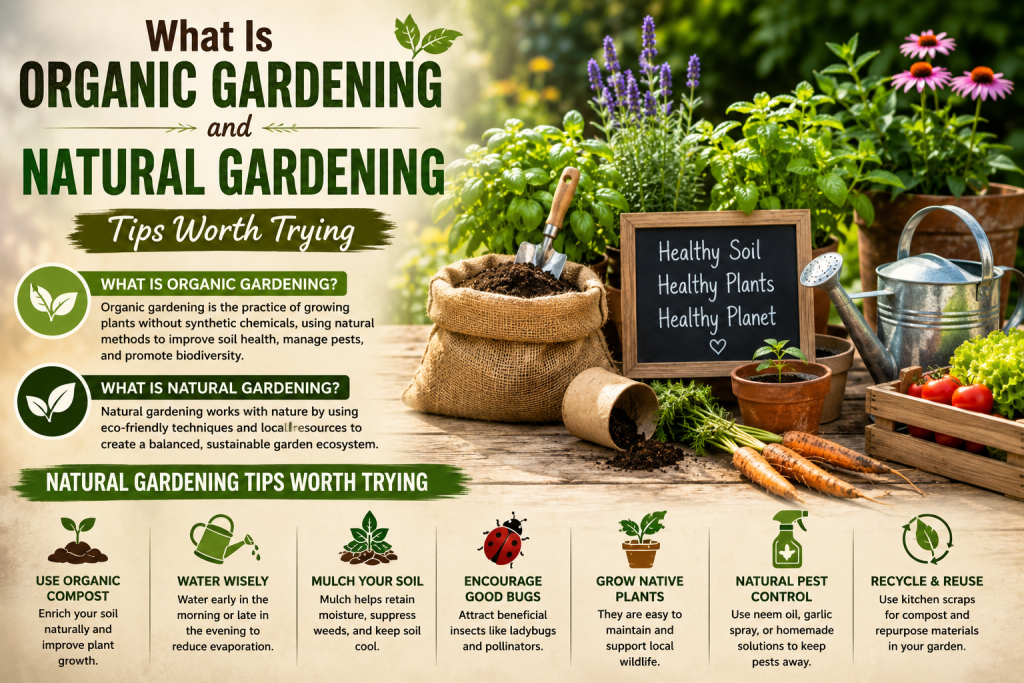
Natural Gardening Tips always begin with a simple idea: growing plants the way nature intended, without synthetic pesticides or chemical fertilizers. Instead, you rely on compost, beneficial insects, and smart planning. Following these Natural Gardening Tips feels slower at first, but the results last longer and taste better too. Once you start applying real Natural Gardening Tips in your own backyard, you’ll notice the difference within a single season.
Pakistani soil often suffers from years of chemical overuse, especially in areas near intensive farmland. Switching to organic farming practices restores microbial life in the soil over time. Your vegetables end up richer in nutrients, and you stop breathing in fumes every time you step outside to water your plants.
Organic vs Chemical Gardening — The Core Difference
Chemical gardening kills pests fast but harms bees, soil bacteria, and sometimes your own health. Natural Gardening Tips favor a slower approach instead, one that builds resistance naturally over time. Think of it like antibiotics versus a healthy immune system: one works instantly and weakens things over time, while the other takes patience but keeps working for years. This is exactly why so many gardeners are turning back to genuine Natural Gardening Tips rather than quick chemical fixes. Applying proper Natural Gardening Tips today means fewer problems tomorrow, and a garden that actually gets stronger with age rather than more dependent on sprays.
Benefits of Natural Gardening for Pakistani Homes and Climate
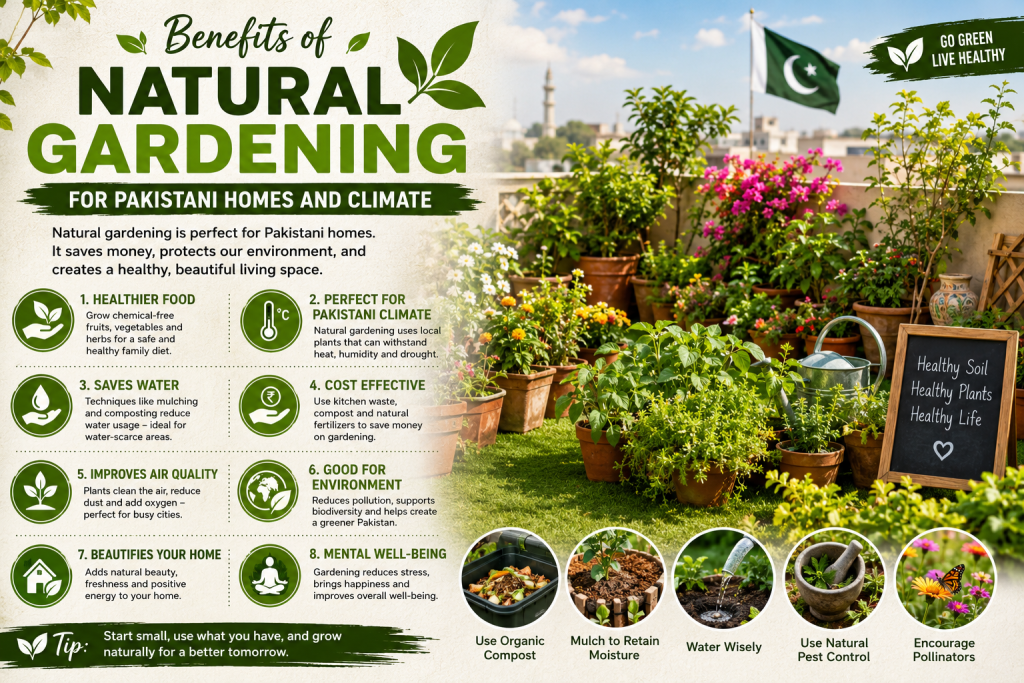
Pakistan’s climate swings from scorching summers to mild winters, which makes chemical-dependent plants struggle. Natural Gardening Tips like building hardier root systems help plants cope far better with heat stress. You’ll also save money, since compost and neem oil cost less than branded pesticide bottles from the market.
Essential Tools and Supplies for a Successful Organic Garden
You don’t need fancy imported equipment to start. A trowel, a watering can, and a good pair of gloves cover most of your needs. Applying simple Natural Gardening Tips like raised bed gardening has become popular here too, since it drains better during monsoon season and keeps soil loose for root vegetables like carrots and potatoes.
Good tools last for years if you clean them after use. Rust ruins blades faster than actual gardening does. Keep a small notebook nearby as well, almost like a seed starting calculator, to track sowing dates and harvest windows for each crop you plant.
Basic Gardening Tools Available in Pakistan
Local nurseries in Karachi, Lahore, and Rawalpindi stock everything from khurpa (hand hoes) to pruning shears at reasonable prices. You rarely need to import tools. Visit a nearby nursery on a weekend and you’ll likely find most basics under one roof, often cheaper than online listings.
Organic Fertilizers and Soil Amendments You’ll Need
Cow dung manure, neem cake, and bone meal remain staples across Pakistani households. These amendments feed soil slowly rather than shocking plants with sudden nutrient bursts. Farmyard manure especially works wonders for leafy vegetables like spinach and lettuce grown in home gardens.
Preparing and Enriching Your Soil the Organic Way
Healthy soil grows healthy plants, full stop. Before planting anything, dig down about a foot and check the texture. Sandy soil drains too fast, while clay-heavy soil suffocates roots. Most Pakistani gardens benefit from mixing in compost to balance both extremes and improve overall structure.
Good garden design tips always start underground, not above it. Spend time enriching your beds in the first month, and everything you plant afterward grows stronger with less effort. This single step saves more headaches than any pest spray ever could.
Testing and Improving Soil Quality Naturally
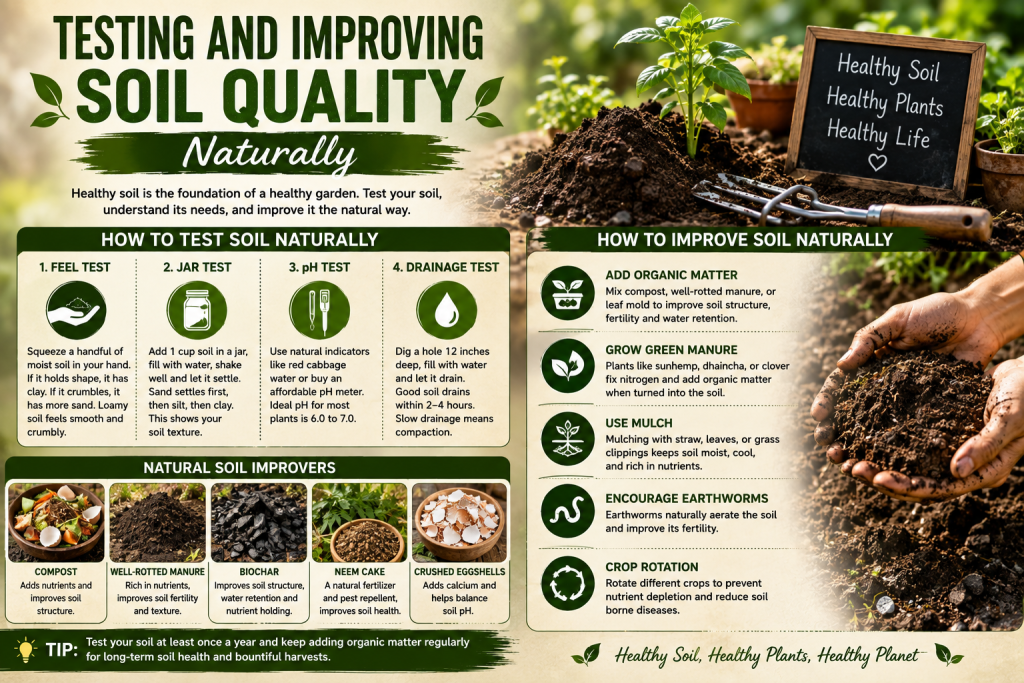
A simple jar test tells you a lot. Fill a jar with soil and water, shake it, then let it settle overnight. The layers reveal sand, silt, and clay ratios, helping you decide what amendments your garden actually needs.
Making Compost at Home (Desi Compost Methods)
Kitchen scraps, dried leaves, and eggshells turn into black gold within two to three months. Layer wet and dry materials, turn the pile weekly, and keep it moist but not soggy. This desi compost method costs nothing beyond your own effort.
Monthly Organic Garden Chores (Weeding, Watering and Pruning)
Consistency matters more than intensity in gardening. A few minutes daily beats one exhausting session every weekend. Organic garden chores rotate through the seasons, and staying on top of them prevents small problems from turning into major setbacks later.
Think of your garden like a relationship. It needs regular attention, not grand gestures once in a while. Following a regional planting guide suited to your specific city helps you time chores correctly instead of guessing based on generic advice from abroad.
Weeding Without Chemical Herbicides
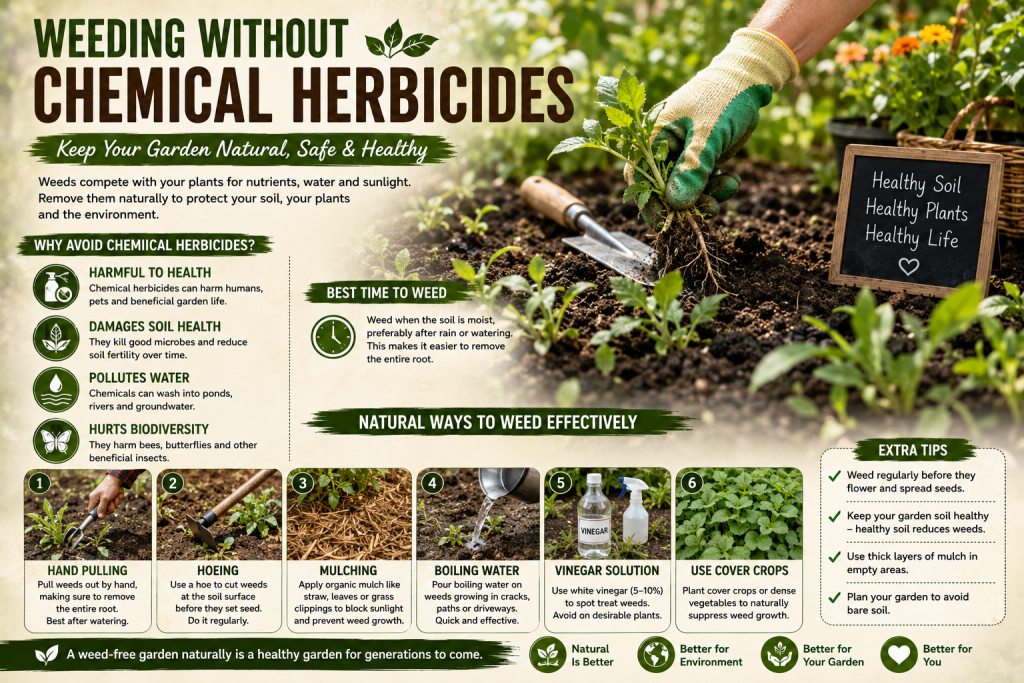
Pull weeds early, right after rainfall, when soil is soft and roots come out whole. Mulching with straw or dried grass smothers new weed growth before it even starts, cutting your weeding time significantly over a full season.
Smart Watering Techniques for Pakistan’s Climate
Water early morning or late evening to reduce evaporation loss in the summer heat. Deep, infrequent watering builds stronger roots than daily shallow sprinkling. Drip irrigation, even a basic homemade version, saves water and money simultaneously.
Pruning Basics for Healthier Plant Growth
Cut away dead or diseased branches first, always using clean, sharp tools. Pruning during cooler months, similar to winter garden prep routines followed elsewhere, encourages stronger spring growth and prevents disease from spreading between plants.
Natural Pest Control Methods That Actually Work
Bugs will find your garden eventually, no matter how careful you are. The goal isn’t zero pests but balance. Garden pest control (mosquitoes) and other nuisances becomes manageable once you introduce natural predators and simple homemade remedies instead of reaching for a spray bottle.
Many Pakistani gardeners already know organic pest control methods for garden use, passed down from grandparents who gardened long before chemical pesticides existed. These old tricks still work today, often better than anything sold in a shop.
Homemade Neem Oil and Garlic Spray Recipes
Mix neem oil with water and a drop of dish soap, then spray weekly on affected leaves. Garlic and chili spray works similarly against aphids and whiteflies. Both remedies break down naturally without leaving harmful residue on your vegetables.
Beneficial Insects That Protect Your Garden Naturally
Ladybugs eat aphids by the hundreds, while planting flowers attracts them naturally. Learning how to attract pollinators to garden spaces also boosts vegetable yields significantly. Even without native milkweed for pollinators, local flowering plants like marigold do a similar job here.
“The garden that welcomes bees and ladybugs rarely needs a pesticide bottle,” says veteran organic farmer Kate Spring, who has spent over a decade teaching natural growing methods to home gardeners.
How to Grow Organic Vegetables (Tomatoes, Potatoes and More)
Vegetables reward effort quickly, which makes them perfect for beginners. What to plant in a home vegetable garden depends on your local climate, but tomatoes and potatoes grow reliably across most of Pakistan with minimal fuss and steady watering.
Success here comes down to timing and spacing. Crowd your plants and you invite disease. Give them room, and tips for growing tomatoes become almost unnecessary, since healthy spacing solves half your problems automatically before they even start.
Growing Tomatoes Organically in Pakistani Soil and Weather
Plant tomatoes after the last frost risk passes, staking them early to support heavy fruit later. How to grow potatoes organically shares similar logic: consistent watering and full sun matter more than fancy fertilizer brands.
Planting and Hilling Potatoes the Natural Way
When to plant potatoes depends on your region, but generally late winter works well across Punjab and Sindh. How to hill potato plants involves mounding soil around stems as they grow, which protects developing tubers from sunlight and pests.
Other Easy Vegetables for Beginner Organic Gardeners
Spinach, radish, and coriander sprout within days and forgive minor mistakes easily. These crops build confidence before you tackle trickier vegetables like cauliflower, which demand more patience and consistent cool weather to head properly.
| Vegetable | Best Planting Season in Pakistan | Days to Harvest |
|---|---|---|
| Tomato | February–March | 70–85 days |
| Potato | November–December | 90–120 days |
| Spinach | September–October | 30–40 days |
| Radish | October–February | 25–30 days |
| Coriander | Year-round (cooler months best) | 20–30 days |
Growing Microgreens and Herbs in Small Spaces
Not everyone has a big yard, and that’s fine. Mastering microgreens requires nothing more than a shallow tray, some soil, and a sunny windowsill. Within a week, you’re harvesting nutrient-packed greens for salads and sandwiches, right from your kitchen counter.
Apartment dwellers across Karachi and Lahore have taken to this trend quickly. How to grow microgreens at home involves far less effort than a full vegetable bed, making it perfect for anyone short on time, space, or gardening confidence.
Starting Microgreens Indoors
Indoor seed starting works best with a shallow tray, damp soil, and daily misting. How to start seeds indoors for microgreens takes just five to seven days before your first harvest, faster than almost any other crop you could grow.
Best Herbs to Grow Naturally on Balconies and Rooftops
Mint, basil, and curry leaf plants thrive in pots with minimal care. Succession sowing vegetables and herbs together keeps your balcony productive year-round, since you replant as soon as one batch finishes rather than waiting for a full season.
Companion Planting and Native Plants for a Healthier Garden
Some plants genuinely help each other grow. Companion planting pairs like tomatoes with basil or marigold with almost anything, since certain combinations repel pests naturally while others improve soil nutrients for their neighbors close by.
A native plants garden also demands far less water and fertilizer than imported ornamental species. Local plants evolved alongside Pakistani soil and rainfall patterns, which means they simply know how to survive here without constant babysitting.
Companion Planting Combinations That Work Well Together
Plant basil near tomatoes to repel whiteflies, or marigolds along vegetable borders to deter nematodes. These pairings reduce pest pressure naturally, cutting down your reliance on sprays while also making your garden look more visually interesting.
Why Native Pakistani Plants Need Less Care and Water
Native plants vs non-native plants comparisons always favor the locals for water efficiency. Benefits of growing native plants include stronger drought resistance and better support for local pollinators, birds, and beneficial insects that keep your whole garden balanced.
When and How to Harvest Your Organic Produce
Timing matters just as much as growing technique. Pick vegetables too early and you lose flavor. Wait too long and they turn tough or bitter. Following a seasonal gardening guide specific to each crop helps you catch that perfect harvest window every time.
How to extend vegetable harvest periods often comes down to picking regularly. Many plants, like okra and beans, produce more fruit when you harvest consistently, since the plant keeps trying to reproduce as long as you keep removing mature produce.
Signs Your Vegetables and Herbs Are Ready to Harvest
Color, firmness, and size all signal readiness differently across crops. Tomatoes should feel slightly soft with deep color, while potatoes are ready once the top foliage yellows and starts dying back naturally in the bed.
Proper Harvesting Techniques to Boost Future Yield
Use clean scissors or knives rather than pulling by hand, which can damage stems and roots. Gentle harvesting encourages plants to keep producing longer, especially for herbs like mint and basil that regrow quickly after careful cutting.
Common Organic Gardening Mistakes and How to Avoid Them
Every gardener makes mistakes, even experienced ones. The trick is catching them early before they wipe out an entire season’s work. Following clear steps to start an organic garden from day one prevents most of the common beginner errors people run into.
Patience solves more problems than any product ever will. Gardens reward consistency, not perfection. Give yourself permission to fail a little in your first season, then adjust based on what actually happened in your own specific soil and climate.
Overwatering, Overcrowding and Other Beginner Errors
Too much water drowns roots just as badly as too little kills them from thirst. Overcrowded plants compete for nutrients and light, leading to weak, disease-prone growth across the entire bed rather than just one struggling plant.
How to Fix a Struggling Organic Garden
Start by checking soil moisture and drainage first, since most problems trace back there. Thin out crowded seedlings without guilt. A smaller, healthier harvest always beats a crowded bed full of stunted, sickly plants competing for survival.
Final Thoughts
Natural gardening rewards patience over quick fixes. Interestingly, gardeners as far away as New York’s Hudson Valley zone 6a garden climate follow surprisingly similar principles, proving that good soil health and natural pest control translate across very different growing zones. Start small, stay consistent, and your garden will thank you season after season.
Related Links:
https://infusions.pk Organic Herbal Store
https://webhelp.pk IT Solutions & Development Technical Support Company
https://eeshaal.com Travel & Tour Company
https://gulbergoffice.com Real Estate Company